
 Darren Wills
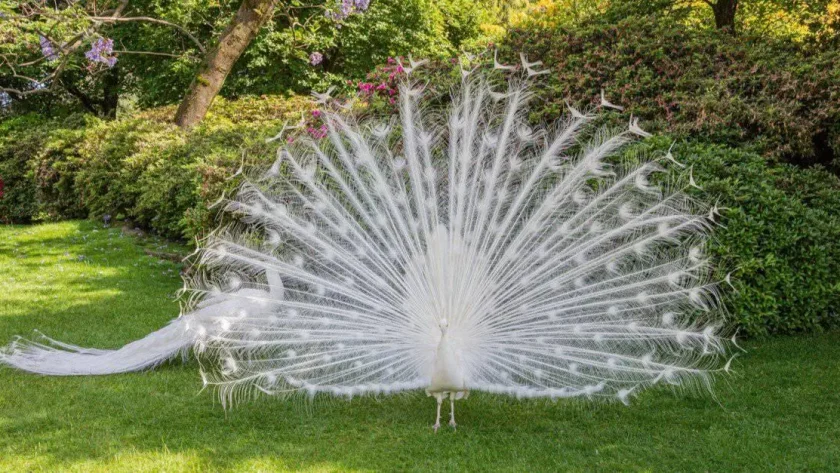
Have you ever seen a white peacock? Its bright white feathers and long, flowing train make it hard to miss. Unlike the familiar blue peacock, this bird has a clean, snowy look that many people find fascinating.
But why some peacocks are white in colour? are they albino peacock? How rare they are, and how much does one cost? We will find out in this article.
A white peacock is usually a white form of the Indian peafowl (Pavo cristatus). It is not a separate species, and most white peafowl are not albino. Their white feathers are linked to a condition called leucism.
White peafowl are less common than blue ones, but they are not as rare in captivity as many people think. Breeders have raised them for years, and you can see them in some zoos and bird collections.
Let’s look at what makes these birds so special, where they live, and what you should know before buying one.
About White Peacock
A white peacock is the male of a white-plumaged form of the Indian peafowl. The female is called a white peahen. Their young are known as peachicks.
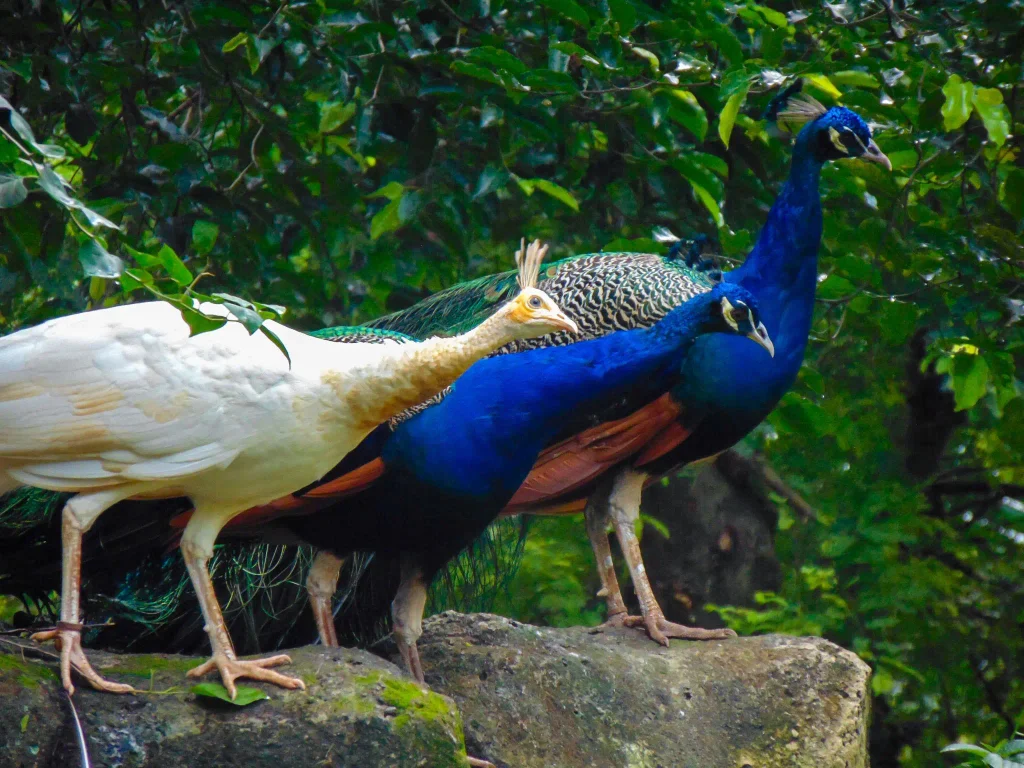
Most people know peacocks for their blue necks and colorful tail feathers. White peafowl look quite different. Their feathers are mostly white, from their bodies to the long feathers that males spread during courtship.
Even so, they belong to the same species as the familiar Indian blue peafowl. Their color does not make them a separate kind of bird.
White peafowl are also not a new discovery. They have been known for many years and are now kept in bird collections around the world.
Scientists have studied their unusual color to learn how genes affect feather pigmentation.
For more details, read this scientific study on white plumage in Indian peafowl.
Are White Peacocks Albino?
No, most white peacocks are not albino. Their white feathers are usually linked to leucism, a condition that affects color in feathers.
The two conditions can look similar, but they are not the same.
White peacock vs. Albino peacock
| Feature | White peafowl | Albino bird |
|---|---|---|
| Feathers | Mostly white | White or very pale |
| Pigment | Reduced or absent in parts of the plumage | Melanin production is greatly reduced or absent |
| Eyes | Usually retain normal pigment | May appear pink or reddish |
| Cause | Often linked to leucism | Caused by a change in melanin production |
These are general differences. You cannot always tell the cause of a bird’s color just by looking at it.
Leucism affects the color of feathers. Depending on the type, other parts of the bird may still have normal pigment. Albinism affects the production of melanin, which gives color to the eyes, skin, and feathers.
The Cornell Lab of Ornithology explains how leucism, albinism, and other color changes can affect birds.
Why are white peacock feathers white in colour?
Feather color depends on pigments and the way light interacts with feather structures. Genes also play a role in how color develops.
In white Indian peafowl, leucism changes the way pigment appears in the feathers. This gives the bird its pale look.
Researchers have also studied genes linked to this color pattern. A scientific paper published in GigaScience explored a genetic change linked to leucistic plumage in Indian peafowl.
You can read the research here: Genetic research on leucistic Indian peafowl.
So, while a white peacock may look like an albino bird, the two terms do not mean the same thing.
How Rare Is a White Peacock?
White peacocks are less common than the usual blue Indian peafowl. Still, there is no reliable global count that tells us exactly how many white peafowl exist.
Their rarity also depends on where you look.
Are white peacocks rare in the wild?
White plumage is an unusual color variation. You are less likely to see it than the familiar blue form of the Indian peafowl.
White birds have been reported in India, the native range of this species. Today, however, many white peafowl live in zoos, aviaries, and private bird collections.
Captive breeding has made them easier to find in some places. This means a white peacock can be uncommon in the wild but still available from a breeder.
How rare is a pure white peacock?
A pure white peacock has feathers that appear almost entirely white. It may look rare, but its color alone does not tell us how unusual its genes are.
Breeders can raise white peafowl and maintain this color over generations. Some birds also have mixed plumage, with white patches alongside blue or other colors.
These birds are often called pied peafowl. They look different from birds with an all-white appearance.
So basically, white peafowl are uncommon compared with blue Indian peafowl, especially in the wild. But there is no proven global figure for their exact numbers or rarity.
Where Are White Peacocks Found?
White peafowl are a color form of the Indian peafowl. This species is native to the Indian subcontinent.
Today, white peafowl can also be found in zoos, aviaries, ornamental gardens, and private bird collections in different parts of the world.
Do white peacocks live in the wild?
White-plumaged Indian peafowl have been recorded in India. However, they are not as common as the usual blue birds.
You may be more likely to see a white peacock in a managed setting, where breeders or bird collections care for them.
For example, the Karachi Zoological and Botanical Garden’s white peacock profile shows how this striking bird is presented to the public in a zoo setting.
This is one example of a white peacock in a managed collection, rather than a guide to where the birds are most common.
What habitats do Indian peafowl prefer?
Indian peafowl live in several types of habitat. These include open woodland, scrub, forest edges, farmland, and areas near people.
They need access to food, cover, and safe places to rest. Their exact habitat depends on local conditions.
White peafowl in captivity need proper shelter, enough space, a suitable diet, and protection from predators. Their care needs matter just as much as their unusual color.
What Colors Can Peacocks Be?
Peafowl come in several different colours and patterns. The familiar blue and green bird is the best-known form, but it is not the only one.
Here are some colour forms you may come across:
- Indian blue: The familiar form, with a blue neck and colorful green and blue train feathers in mature males.
- White: A form with mostly white plumage.
- Pied: A mix of white patches and the bird’s usual colors.
- Black-shouldered: A color pattern seen in captive Indian peafowl.
- Other captive varieties: Breeders use names such as cameo, bronze, and opal for some color forms.
These names do not all refer to separate species. Some describe color patterns found within captive breeding lines.
What is the rarest color of peacock?
There is no single answer that applies to every population.
Some captive color varieties may be hard to find. Others may be more common among breeders. Their availability depends on breeding history and location.
White peafowl stand out because their feathers lack the familiar blue and green look. However, that does not prove they are the rarest color in every setting.
If you enjoy learning about unusual peacock colors, check out PetCareStory’s guide to the Purple Peacock.
Now let us talk about the speciality of white coloured peacock.
What Is Special About a White Peacock?
The first thing you notice about a white peacock is its color. Its bright feathers stand out against green grass, trees, and other natural backgrounds.
But its looks are only part of the story.
- Its white feathers: The pale plumage gives the bird a very different look from the usual blue peafowl.
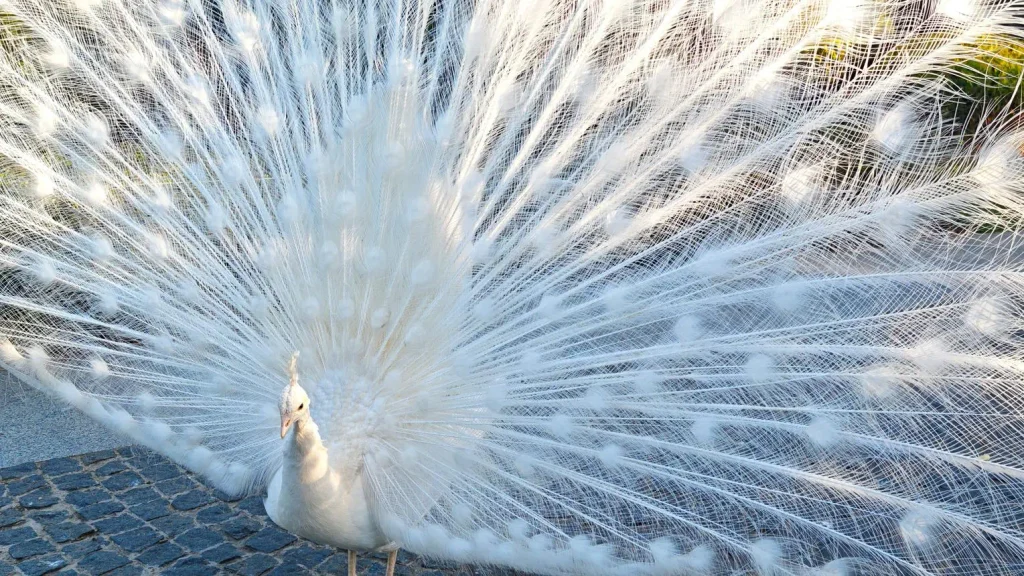
- Its long train: Mature males grow long upper tail coverts. They spread these feathers into a fan during courtship. These are not the bird’s true tail feathers, although the two work together during the display.
- Its genetics: White plumage gives scientists a chance to study how genes affect color in birds.
- Its cultural appeal: White peacocks often appear in art, photography, and ornamental gardens. Some people also link them with beauty, renewal, and good fortune.
White feathers do not mean a bird is healthier or better than other peafowl. They are simply one of the traits that make it stand out.
Are White Peacocks Male or Female?
Both male and female Indian peafowl can have white feathers. A male is called a peacock. A female is called a peahen. Together, they are known as peafowl.
As they grow, males usually develop a longer and more elaborate train. They spread it during courtship to attract females.
Female peafowl usually have a less elaborate train. However, color alone is not a reliable way to tell the sex of a bird when both are white.
Young birds can be harder to identify by sight. If you plan to buy one, ask the breeder about its age and sex. Reliable records can help, especially if you want a breeding pair.
How Much Does a White Peacock Cost?
The price of a white peacock depends on several things. These include its age, sex, breeding history, location, and the seller’s asking price.
There is no single price that applies to every white peacock. A young bird, a mature male, and a breeding pair are different purchases.
What affects the price of a white peacock?
Here are some factors that can change the cost:
- Age: Young birds and mature birds may sell for different prices.
- Sex: The price may vary based on the bird’s sex and local demand.
- Breeding history: Records and known parentage may affect the asking price.
- Location: Prices and availability differ from one region to another.
- Transport: Shipping a large bird may add to the cost.
- Care needs: Housing, food, and veterinary care add to the long-term expense.
For a general look at peafowl prices, see The Pricer’s peacock cost guide. Keep in mind that general price examples are not a guaranteed quote for a white peacock.
How much money is a white peacock worth?
A seller’s asking price does not always reflect a bird’s health or quality.
Before you buy, compare current listings from reputable breeders. Ask about the bird’s age, sex, health, and breeding history. Also check whether the price includes transport.
You should also check the rules in your area before buying a peacock. Some places have limits on keeping large birds. Peafowl also need secure outdoor space, shelter, and proper care.
They can be noisy, too, so they may not suit every home.
If you are thinking about owning one, plan for its care before you focus on the price.
What Does It Mean If You See a White Peacock?
People attach different meanings to seeing a white peacock. These meanings often depend on culture, religion, or personal belief.
Some people link white peacocks with purity, renewal, beauty, or good luck. Others see them as a sign of change or a fresh start.
These ideas can be meaningful to people who believe in them. But these are not scientific facts.
What kind of omen is seeing a peacock?
There is no scientific evidence that seeing a peacock predicts a future event.
If you see a white peacock, you may choose to view the moment as a personal sign or a reminder of something important to you. That is a matter of personal meaning, not proof of a supernatural message.
You can enjoy the beauty of the bird without feeling that its appearance must predict good or bad luck.
Frequently Asked Questions
Are white peacocks albino?
Usually, no. Most white peafowl are described as leucistic. This means their feather color is affected by changes in pigmentation. Albinism involves a different process that affects melanin production.
How rare is a white peacock?
White peafowl are less common than blue Indian peafowl, especially in the wild. They are also bred in captivity, so they may be easier to find in some bird collections.
Can a white peacock breed with a blue peacock?
Yes. White and blue Indian peafowl can breed with each other. The color of their young depends on the genes they inherit from both parents.
Are white peacocks always male?
No. Both males and females can have white feathers. Mature males usually develop a longer and more elaborate train.
Where can you see a white peacock?
You may see white peafowl in some zoos, aviaries, ornamental gardens, and private bird collections. White-plumaged birds have also been recorded in India.
How much does a white peacock cost?
The price varies with age, sex, location, and availability. Ask reputable breeders for current prices, and remember to budget for transport, housing, food, and veterinary care.
Is a white peacock a separate species?
No. A white peacock is a color form of the Indian peafowl (Pavo cristatus), not a separate species.
What does seeing a white peacock mean?
Some people link white peacocks with purity, renewal, or good luck. These are cultural beliefs rather than scientific predictions.
Final Thoughts
White peacocks are beautiful birds, but there is more to them than their unusual colour. Their white feathers are usually linked to leucism, not albinism. They are less common than blue Indian peafowl, yet they are bred in captivity and can be found in bird collections around the world.
Their price also varies. Age, sex, location, and care costs all matter if you plan to buy one. Whether you are curious about their color, rarity, or meaning, white peafowl are worth learning about. Understanding the facts makes their beauty even more interesting.
For more bird facts and peacock guides, visit PetCareStory’s Peacock category.

