 Darren Wills
 There’s a particular kind of chaos that happens when a smart dog doesn’t have enough to do.
My cousin has a two-year-old German Shepherd named Otto. Beautiful dog. Completely unhinged when bored. He’d shred mail, rearrange shoes, and once — memorably — removed every single cushion from the sofa and stacked them in the hallway. Nobody knew why. Otto wasn’t telling.
Her trainer suggested a wooden dog puzzle. Within a week, Otto had something to focus on. Within a month, the cushions stayed on the sofa.
That’s not a miracle. It’s just what happens when a dog’s brain finally gets a job.
Wooden puzzle toys have quietly become one of the most popular enrichment tools for dogs — and honestly, for good reason. But not every wooden puzzle is right for every dog, and there are a few things worth knowing before you buy one. Let’s get into it.
What Is a Wooden Dog Puzzle, Exactly?
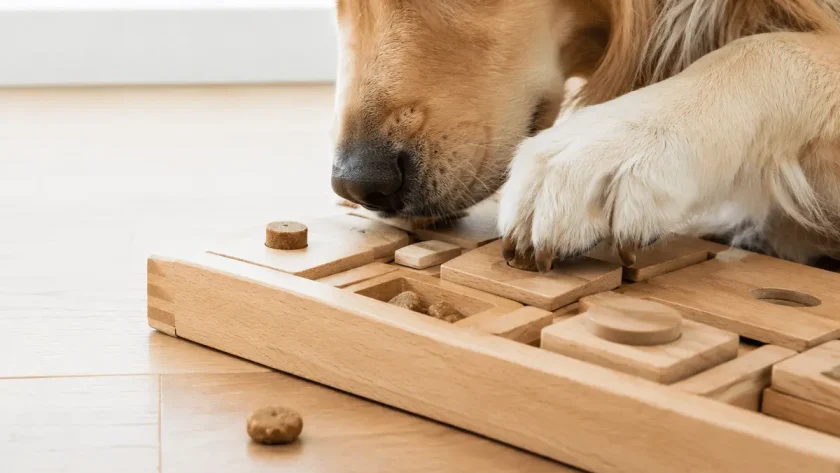
A wooden dog puzzle is an enrichment toy — usually made from natural or food-safe wood — that hides treats or kibble inside compartments, pegs, or sliding pieces. Your dog has to figure out how to move, lift, or slide parts of the puzzle to uncover the reward.
Unlike rubber or plastic toys, wooden puzzles tend to be sturdier, more visually appealing, and often more challenging because the mechanisms are more varied. They come in flat board designs, multi-layer constructions, and everything in between.
The core idea is simple: your dog uses their brain to earn food. That’s it. But the effect on behavior, focus, and overall calm is anything but simple — and we’ll get into why shortly.
Are Wooden Dog Puzzles Actually Better Than Plastic Ones?
This comes up a lot, so let’s address it directly rather than dancing around it.
Wooden puzzles have some real advantages over plastic:
They tend to be more durable for moderate chewers. Good quality wooden puzzles can handle nosing, pawing, and light chewing better than thin plastic. That said, they’re not indestructible — a determined power chewer will destroy one just as fast.
They’re often more complex. The mechanisms in wooden puzzles — peg pulls, spinning wheels, hinged compartments — tend to offer more variety than basic plastic slider puzzles. More variety means longer engagement and more genuine mental stimulation.
They feel more substantial. This is a bit harder to quantify, but wooden puzzles tend to stay in place better on the floor while your dog works on them. Lightweight plastic designs can skid around, which frustrates some dogs.
The downsides? Wood can absorb moisture and odor over time, which makes cleaning slightly more involved. And if your dog is a serious chewer — the kind who destroys things rather than engages with them — wood can splinter, which is a safety concern.
We’ll cover how to pick the right type for your dog’s personality further down.
Why Puzzle Toys Work: The Short Version
If you want the full science, our post on puzzle toys for dogs with separation anxiety goes deep on the neuroscience. But here’s the quick version.
When your dog works a puzzle — nosing around, sliding pieces, figuring out where the treat went — their brain is burning real energy. Research has shown that cognitive tasks produce measurable mental fatigue in dogs, comparable to physical exercise. A dog that’s mentally tired is a dog that’s calmer, less destructive, and generally easier to live with.
On top of that, every time they successfully get a treat out, their brain releases dopamine. That’s the reward chemical. Over time, your dog starts associating the puzzle — and the routine around it — with good feelings. Which is exactly what you want.
Types of Wooden Dog Puzzles
Not all wooden puzzles work the same way. Here’s a breakdown of the main types and who they’re best suited for.
Sliding compartment puzzles
These are the most common style. Wooden pieces slide back and forth over compartments to reveal hidden treats. Your dog learns to move each piece in the right direction.
Good for: beginners, senior dogs, dogs that are new to enrichment toys. The sliding mechanism is intuitive enough for most dogs to figure out without too much frustration.
Peg pull puzzles
Wooden pegs or knobs lift out of holes to uncover treats beneath. These are often more challenging because they require a different kind of motor skill — gripping and lifting rather than pushing.
Good for: dogs who’ve mastered slider puzzles and need a new challenge. Also great for breeds with good dexterity like Border Collies and Australian Shepherds.
Spinning wheel puzzles
Circular wooden discs rotate over treat compartments. Some require spinning in a specific direction; others have multiple wheels that need to be aligned.
Good for: dogs who like to use their nose and paw to push and spin rather than grip. Often a favorite with scent hounds.
Multi-layer or combination puzzles
These combine several mechanisms — sliders, pegs, and spinning elements — across multiple levels. The dog has to work through each layer to access all the treats.
Good for: experienced puzzle solvers, high-drive breeds, and dogs that blow through simpler puzzles in 90 seconds flat (looking at you, Otto).
Hide-and-seek wooden puzzles
Small wooden compartments that open, flip, or slide to reveal hidden toys or treats. Some have fabric elements too. More forgiving for anxious dogs because the mechanism is usually simple even when the puzzle looks complex.
Good for: dogs with anxiety who need gentle engagement, puppies, and older dogs who need something stimulating but not physically demanding.
Wooden Dog Puzzles by Breed Size
The size of the puzzle matters as much as the type. Here’s a rough guide:
| Dog Size | What to Look For |
|---|---|
| Small breeds (under 10kg) | Smaller compartments, lighter pieces, shorter pegs they can grip |
| Medium breeds (10–25kg) | Standard sizing works well — most wooden puzzles are designed for this range |
| Large breeds (25kg+) | Wider compartments, heavier base that won’t skid, taller pegs |
| Flat-faced breeds (Bulldogs, Pugs) | Wide openings and shallow compartments — narrow spaces are frustrating with a flat snout |
| Senior dogs | Low-effort mechanisms, nothing requiring sustained pressure or complex grip |
Dog Puzzles for German Shepherds: What Actually Works
German Shepherds deserve their own section here because they’re one of the most common breeds people search for when it comes to puzzle toys — and they have specific needs.
GSDs are working dogs. They were bred to herd, track, and problem-solve all day long. Left without mental stimulation (like Otto), they find their own outlets. Usually destructive ones.
For German Shepherds specifically:
Go straight to Level 2 or Level 3 puzzles. Most adult GSDs will blow through a beginner puzzle in under two minutes once they’ve figured out the mechanism. They need genuine challenge to stay engaged.
Prioritize durability. German Shepherds have strong paws and aren’t always gentle. Look for solid hardwood construction (beech and bamboo are popular for good reason) with no loose small parts that could be chewed off.
Rotate frequently. GSDs have excellent memories. Once they’ve solved a puzzle a few times, it stops being stimulating — they’ve memorized the solution. Keep two or three different puzzles in rotation and swap them weekly.
Combine with nose work. German Shepherds are also scent-driven dogs. Pairing a wooden puzzle with snuffle mats or scent-based hide-and-seek games gives them a more complete enrichment experience.
Best formats for GSDs: Multi-layer combination puzzles, peg pull boards, and spinning wheel puzzles tend to hold their attention longest. Avoid very lightweight flat designs — a determined GSD will just flip it over.
How to Introduce a Wooden Puzzle to Your Dog
This is where a lot of owners go wrong. They buy a great puzzle, set it down, and expect the dog to immediately know what to do. When the dog sniffs it once and walks away, they conclude the dog isn’t interested.
Usually the dog just doesn’t understand the game yet. Here’s how to actually introduce it:
Step 1 — Load it with something irresistible. Kibble alone often isn’t motivating enough, especially for the first few sessions. Use small pieces of real chicken, cheese, or whatever your dog goes wild for. Make the reward worth the effort.
Step 2 — Demonstrate it yourself. Sit on the floor, make a big deal of loading the treats, and then slowly move one piece to reveal a treat. Let your dog eat it immediately. Do this two or three times.
Step 3 — Let them take over. Step back and let your dog try. Don’t hover. Don’t rush in to help the moment they look confused. Give them a few minutes to explore.
Step 4 — Praise the attempt, not just the success. Any sniffing, pawing, or nosing at the puzzle gets verbal praise. “Yes! Good dog!” even when they haven’t solved it yet. You’re building engagement, not just rewarding results.
Step 5 — End early the first few times. Stop the session while they’re still interested, not after they’ve given up. You want the experience to end positively every single time, especially early on.
Step 6 — Gradually reduce your involvement. Over several sessions, step further back. Eventually, just place the loaded puzzle down and walk away. By this point, they know the game.
Safety: What to Watch For With Wooden Puzzles
Wood is generally safe for dogs, but there are a few specific things to check before buying and while using a wooden puzzle toy.
Check for splinters or rough edges. Any cracked or splintered wood should be retired immediately. Run your hand over every edge before giving it to your dog.
Make sure it’s untreated or food-safe. Some wooden toys are painted or varnished with chemicals that aren’t safe for dogs to mouth repeatedly. Look for puzzles that specifically state they’re made with pet-safe finishes, or opt for unfinished natural wood.
Supervise new puzzles. Especially for dogs that are strong chewers. The first few sessions should be watched so you know how your dog is engaging — problem-solving versus trying to destroy.
Don’t leave wooden puzzles with water bowls. Wood and moisture over time leads to warping and mold. Store puzzles dry and clean them with a slightly damp cloth rather than soaking them.
Replace worn puzzles. A puzzle that’s been used dozens of times may have loose pieces, worn compartments that no longer hide treats properly, or structural weakness. Inspect regularly.
How Often Should Dogs Use Wooden Puzzles?
Daily use is ideal for most dogs — especially high-energy breeds, anxious dogs, or dogs that spend significant time alone. Even one 15–20 minute session a day makes a measurable difference in behavior over weeks.
That said, variety matters. Using the exact same puzzle every single day means your dog memorizes the solution and it stops being mentally engaging. It’s still a slow way to eat, but it’s no longer real enrichment.
Aim for a rotation of two to three different puzzles and swap between them every few days. Mix in different formats — a wooden slider one day, a snuffle mat the next, a peg puzzle the day after. The variety keeps the brain genuinely challenged rather than just going through memorized motions.
When Wooden Puzzles Aren’t the Right Choice
Wooden puzzles are brilliant for most dogs. But there are situations where they’re not the best fit:
Power chewers. If your dog’s default response to a new object is to chew it apart, wood will splinter. Stick to rubber puzzle feeders or KONG-style toys that can handle real chewing force.
Dogs with clinical anxiety. A dog in genuine panic — from severe separation anxiety, noise phobia, or trauma — often can’t engage with any puzzle at all. The anxiety overwhelms the ability to focus. Our post on how to calm a stressed cat covers some parallel principles for anxious pets that translate across species, but if your dog has serious anxiety, speak to your vet before relying on enrichment toys alone.
Very young puppies. Puppies under 3–4 months are still developing coordination and focus. Simple treat-dispensing balls or soft snuffle mats are better starting points before introducing a wooden puzzle.
Dogs recovering from paw or jaw injuries. The physical manipulation a wooden puzzle requires might be too demanding. Lick mats are a better option while they recover.
Cleaning and Maintaining Wooden Dog Puzzles
This is a topic most product descriptions skip entirely, but it matters for both hygiene and longevity.
After each use, wipe the puzzle down with a slightly damp cloth to remove food residue. Pay attention to the compartments and crevices — those are where bacteria like to grow if food gets trapped and isn’t cleaned out.
For a deeper clean, a mild pet-safe soap and warm water works fine. Rinse thoroughly and let it air dry completely before storing or using again. Never put wooden puzzles in the dishwasher — the heat and water exposure will warp and crack the wood.
Inspect the puzzle every few weeks for any signs of wear — loose pegs, cracked compartments, rough edges. A well-maintained wooden puzzle can last years. A neglected one becomes a safety hazard much sooner.
Frequently Asked Questions
What is a wooden dog puzzle? A wooden dog puzzle is an enrichment toy made from wood that hides treats or kibble inside compartments, pegs, or sliding pieces. Dogs use their nose and paws to figure out how to access the food, providing mental stimulation in the process.
Are wooden dog puzzles safe? Yes, when made from pet-safe materials and maintained properly. Look for untreated natural wood or food-safe finishes. Inspect regularly for splinters or wear, and supervise your dog during the first few uses.
What difficulty level should I start with? Almost always Level 1, regardless of how smart your dog is. An anxious or frustrated dog gives up quickly and forms a negative association with the puzzle. Confidence from easy wins first makes everything easier later.
How long does a puzzle session last? Most dogs stay engaged for 10–20 minutes. End the session on a success — before frustration sets in — and your dog will be enthusiastic about the next one.
Can wooden puzzles help with boredom and destructive behavior? Yes — this is honestly where wooden puzzles have the biggest impact. Many dogs that chew furniture, shred things, or pace constantly are simply under-stimulated. Regular puzzle sessions give their brain something constructive to do, and destructive behavior often drops off significantly.
My dog ignores the wooden puzzle. What should I do? Go back to basics: use higher-value treats, demonstrate the mechanism yourself, and reduce the difficulty. Some dogs need several sessions before they engage independently. Never force it — keep it playful and low-pressure.
Can I make a wooden dog puzzle at home? Yes — DIY wooden dog puzzles are popular and surprisingly simple to make. A basic version involves drilling shallow holes in a piece of untreated wood and hiding treats inside. Just make sure the wood is smooth, free of splinters, and finished with nothing toxic.
The Bottom Line
A wooden dog puzzle isn’t just a toy. For a smart, energetic, or bored dog, it’s a genuine quality-of-life improvement. It burns mental energy, channels natural foraging instincts, and gives dogs something constructive to focus on instead of your sofa cushions.
The key is matching the puzzle to your dog — the right difficulty level, the right size, the right mechanism for how they naturally like to interact with things. Get that right, load it with something they love, and most dogs take to it within a few sessions.
Otto, for what it’s worth, is now on his third wooden puzzle. The cushions have been on the sofa for four months straight.