 Guest Author
By CatCorners Editorial Team
She was fine. That was the thing. She ate her breakfast, slept in her usual spot on the sofa, and came for her evening fuss as usual. Nothing looked wrong. And that was the problem.
Cats are exceptionally good at hiding illness. In the wild, showing weakness was dangerous. A cat can be seriously unwell and still eat and purr. By the time a cat looks ill, the problem has usually been there a while.
A routine check-up is the one time someone trained to spot the early signs gets to look, before the hiding stops working.
What happens at a check-up?
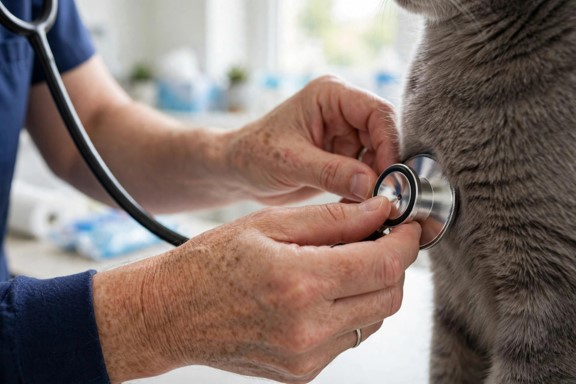
A check-up is not a quick once-over. A good one takes about thirty minutes.
It starts with weight, not just the number on the scale, but the ribs and waist. A cat can be overweight at a “normal” weight for its breed, or underweight and still look fluffy.
Then the head: teeth, gums, eyes, ears. Then the heart and lungs with a stethoscope, the belly for lumps or pain, and the coat and skin.
In older cats, blood pressure is often measured too. It is common in senior cats and almost impossible to spot at home.
If the vet finds something, or if your cat is older, blood and urine tests follow. They see what hands and eyes cannot: early kidney changes, thyroid levels, blood sugar. None of this needs your cat to be ill.
How often should a cat see the vet?
It depends on age.
Kittens need several visits in their first year: vaccinations, parasite treatment, growth checks.
A healthy adult should be seen once a year. From seven, most vets move cats to twice a year. The 2021 AAHA/AAFP Feline Life Stage Guidelines treat seven as the start of the mature stage, and the risks climb from there. Our senior cat care guide explains what changes at this age.
Twice a year sounds like a lot, until you remember a year in a cat’s life is roughly four or five in ours.
| Life stage | Visits | Focus |
| Kitten (under 1) | Several in the first year | Vaccinations, parasites, growth |
| Adult (1 to 6) | Once a year | Weight, teeth, heart, general health |
| Mature and senior (7 and over) | Twice a year | Blood and urine tests, blood pressure, kidney and thyroid |
Five problems check-ups catch early
These are the five problems vets find most often. Our common cat health issues guide covers them in more detail.
Kidney disease. One of the most common diseases of older cats, according to Cornell Feline Health Center. Kidneys fail slowly, and cats compensate well. They drink and pee a little more, and owners often blame hot weather. A blood test and a urine test can show it long before the cat looks ill. Caught early, diet and monitoring can slow it for years.
Overactive thyroid. The most common hormonal disorder of cats over ten. The classic sign: a cat that eats well, sometimes ravenously, and still loses weight. Owners often celebrate the weight loss. The vet won’t. A blood test confirms it, and it is very treatable.
Dental disease. One of the most common things vets find, and one of the easiest to miss at home. Cats keep eating through sore mouths. They just chew on the other side, or swallow food whole. The vet checks gums for redness and teeth for tartar. Left alone, it is painful, and it can seed infection elsewhere.
Diabetes. The signs creep in: drinking more, peeing more, losing weight despite a good appetite. It overlaps with kidney disease and thyroid problems, which is exactly why a blood test matters. The symptoms look alike, the treatments don’t. Caught early, some cats go into remission with diet and treatment.
Urinary problems. Straining in the litter tray, blood in the urine, or going much more often than usual. In male cats, a blocked bladder is a genuine emergency. Hours matter. Knowing your cat’s normal litter habits is what makes the abnormal obvious.
None of the five announces itself clearly at home. All five are easier, and cheaper, to deal with early.
Signs that mean “book sooner, don’t wait for the routine visit”
Some things should not wait for the next check-up: eating nothing at all for 24 hours; drinking far more than usual; sudden weight loss; hiding for more than a day; vomiting repeatedly; straining to urinate; blood in urine, stool, or vomit; laboured breathing. If you see any of these, call the vet the same day. Not sure whether a symptom counts? The Cat Symptom Checker walks through the most common ones. Cats deteriorate quickly.
What to bring, and what to ask
Bring the vaccination record, a note of what it eats (the Cat Calorie Calculator works out daily calories from weight and age) and any medicines, and a short list of anything you have noticed. “She’s drinking more.” “He’s sleeping on the floor instead of the sofa.” “She cries at the litter tray.” Vets would rather hear ten small observations than one big one too late. A carrier with a familiar blanket helps too. A stressed cat is a hard cat to examine.
Ask: is my cat’s weight right for its frame? Are the teeth and gums healthy? Should we run blood and urine tests this time? Is there anything I should watch for at this age? And the question owners forget most: is there anything I should stop doing?
Most check-ups end with good news. That is not a wasted visit. It is the visit working as intended: a baseline, a record, and a professional pair of eyes. The one time it isn’t good news, you will be glad it was found in a consulting room, on an ordinary Tuesday, and not at 2 a.m., when the hiding stopped.
This article is general information only. It is not veterinary advice and it does not diagnose any cat. If your cat shows any of the warning signs above, contact your own veterinarian promptly.
Sources
Cornell Feline Health Center, chronic kidney disease in cats
2021 AAHA/AAFP Feline Life Stage Guidelines
International Cat Care
About the Author
The CatCorners Editorial Team researches and writes practical cat-care guides at CatCorners.