 Darren Wills
A French Bulldog jacket is not a fashion extra. For most Frenchies, it is real cold-weather gear. Their coat is short and fine, their bodies are compact and low to the ground, and they lose heat faster than many owners expect. A good jacket keeps your dog comfortable on winter walks, and a bad one can pinch, ride up or soak through. This guide covers the French Bulldog winter coat styles worth considering, the features that matter, how to measure your dog and where to buy a jacket that fits.
Quick answer: does a French Bulldog need a jacket in winter?
In most cases, yes. French Bulldogs have a thin, short coat with little insulation, so a fitted, water-resistant jacket helps once the temperature drops below roughly 40 to 50°F (4 to 10°C), or sooner in wind, rain and damp air. Choose the size by chest measurement, and look for a roomy neckline and free leg movement.
Key takeaways
- Frenchies have a short, thin coat, so most benefit from a French Bulldog jacket in cold, wet or windy weather.
- Size by chest girth, not by age or weight. Frenchies are broad and stocky, and sizes vary between brands.
- Pick a roomy neckline and wide armholes. Flat-faced breeds should never be squeezed around the neck or chest.
- Match the jacket to the job: padded for freezing days, fleece-lined for chilly walks, waterproof for rain.
- Take the jacket off indoors or in a warm car. Frenchies overheat easily.
Why a French Bulldog Jacket Matters in Winter
Before you compare styles, it helps to understand what you are protecting your dog from. A French Bulldog jacket solves a specific problem: the breed was not built for cold.
Importance of Proper Dog Coats for French Bulldogs
French Bulldogs have a short, smooth coat with very little undercoat. Veterinary resources such as PetMD list the breed among those that do not handle cold well, because that thin coat offers little insulation when temperatures fall. A coat is not a costume for this breed. It is a layer that does the job their fur cannot.
A proper dog coat for a French Bulldog also has to suit the breed’s shape. Frenchies have wide chests, short backs, thick necks and short legs. Jackets cut for long, narrow dogs often gape at the chest, bunch at the neck and leave the belly exposed. That is why breed-specific cuts, or at least careful measuring, make such a difference.
Overview of Winter Challenges for French Bulldogs
Several things work against a Frenchie in winter at once:
- Thin coat. There is not much fur to trap warm air against the skin.
- Small, low body. A small dog loses body heat faster, and a dog this close to the ground has a belly that touches cold pavement, snow and slush.
- Flat face. French Bulldogs are brachycephalic, which means their airways are shorter and narrower. Cold air and exertion can make breathing harder, so shorter walks and gentle layering matter.
- Wet and wind. Damp fur and a cold breeze make a dog feel much colder than the number on the thermometer suggests.
- De-icing salt. Treated pavements can irritate paws, so plan to wipe their feet after every walk.
Puppies, seniors and Frenchies with health conditions feel the cold sooner than healthy adults. If your dog fits one of those groups, start layering a little earlier in the season.
How Cold Is Too Cold for a French Bulldog?
There is no single magic number, and sources vary a little. Most guidance lands between 40°F and 50°F (4°C to 10°C) as the point where a short-coated Frenchie starts to benefit from a layer. Below freezing, a coat and shorter outings become the sensible default. Wind, rain and damp air lower those thresholds, and a healthy young adult will cope better than a puppy or an older dog.
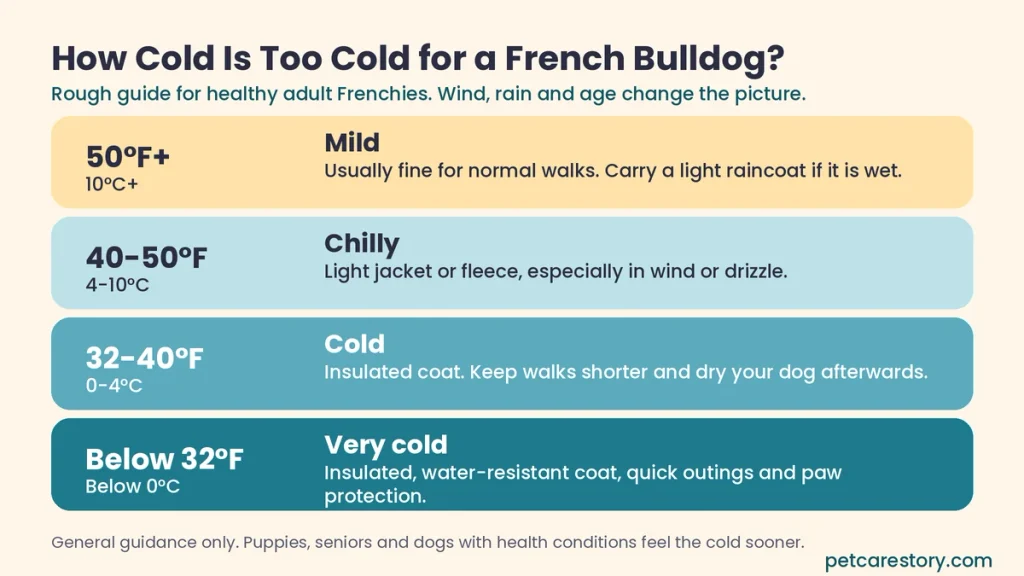
| Temperature | What to expect | What to put on |
|---|---|---|
| 50°F+ (10°C+) | Usually comfortable for normal walks | Nothing, or a light raincoat if wet |
| 40–50°F (4–10°C) | Chilly, especially in wind or drizzle | Light jacket or fleece |
| 32–40°F (0–4°C) | Cold | Insulated coat, shorter walks |
| Below 32°F (0°C) | Very cold | Insulated, water-resistant coat, brief outings, paw protection |
A simple rule from a French Bulldog rescue group is worth remembering: if it is too cold for you to stand outside without a coat, it is too cold for your Frenchie to stay out, even with a coat on.
Best Winter Coats for French Bulldogs
The best winter coat for a French Bulldog is the one that fits properly and suits your climate. A beautiful coat that restricts the shoulders or squeezes the neck is a bad coat, however good it looks in the photo. Here is what to look for. Every good French Bulldog jacket gets these basics right.
Features to Look for in a French Bulldog Winter Coat
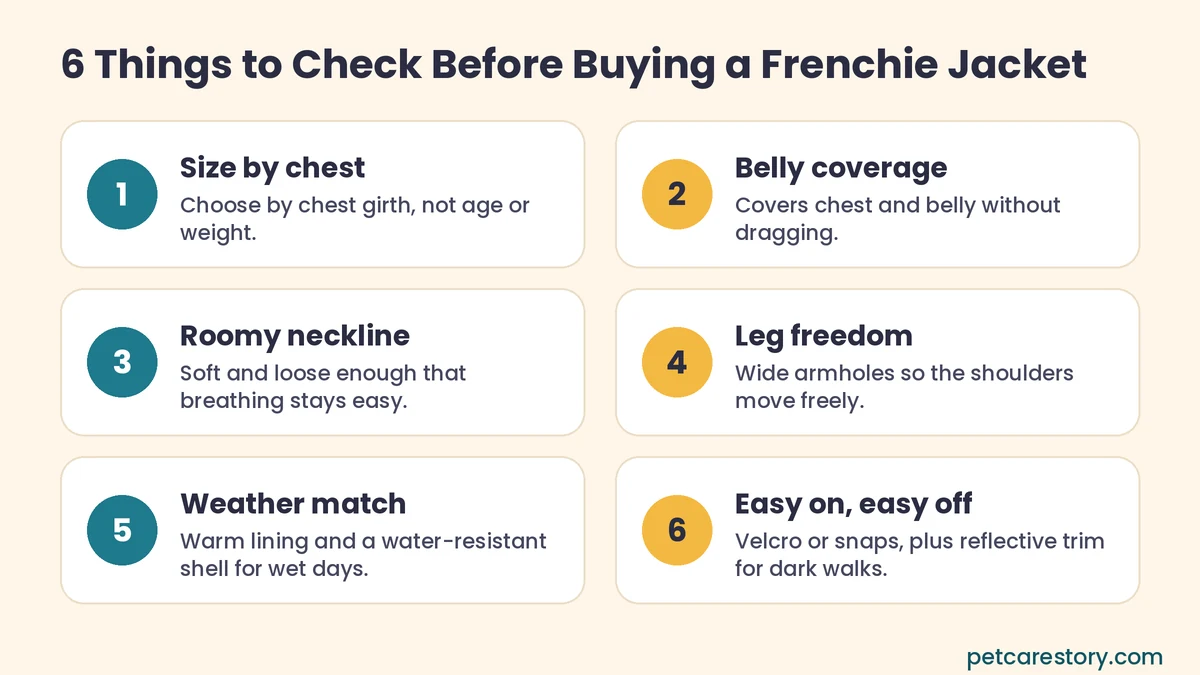
1. Chest-first sizing. Chest girth is the measurement that decides whether a coat works. Frenchies are broad through the chest, so a coat sized by weight or age can be too tight across the ribs and still too long in the back. Always check the brand’s size chart against your own measurements.
2. Good belly coverage. The chest and belly are where a short-coated dog loses the most warmth, and where snow and slush splash up first. A coat that covers the chest and belly keeps your dog warmer than one that only covers the back. It should not drag on the ground, though.
3. A roomy, soft neckline. Because the breed is prone to breathing difficulty, avoid stiff, tight collars or high necks that press on the throat. You should be able to slide two fingers between the neckline and your dog’s neck.
4. Wide armholes and free legs. Frenchies have short legs and a strong front end. Narrow armholes rub behind the elbows and change the way your dog walks. If your dog takes shorter steps or stops moving freely, the jacket is too tight in the shoulders.
5. The right weather protection. A water-resistant outer shell blocks wind and drizzle, and a warm lining (fleece or light padding) traps heat. Check which of the two a coat really offers. Many fleece coats are warm but not waterproof, and many thin shells are waterproof but not warm.
6. Easy on and off. Velcro, snaps or a short zip make dressing a wiggly dog far easier. Avoid long dangling ties, loose cords and large decorative buttons, which can snag or be chewed.
7. Reflective trim. Winter evenings are dark, and a reflective strip makes your dog easier for drivers and cyclists to spot.
8. Harness compatibility. Many vets recommend harnesses over collars for flat-faced breeds, because a harness avoids pressure on the throat. If your dog wears one, choose a coat with a harness opening that does not rub, or one cut to sit comfortably over it.
Fit matters in both directions. The American Kennel Club notes that jackets also should not be so loose that a dog could become tangled in them while walking or playing, so snug but not tight is the goal.
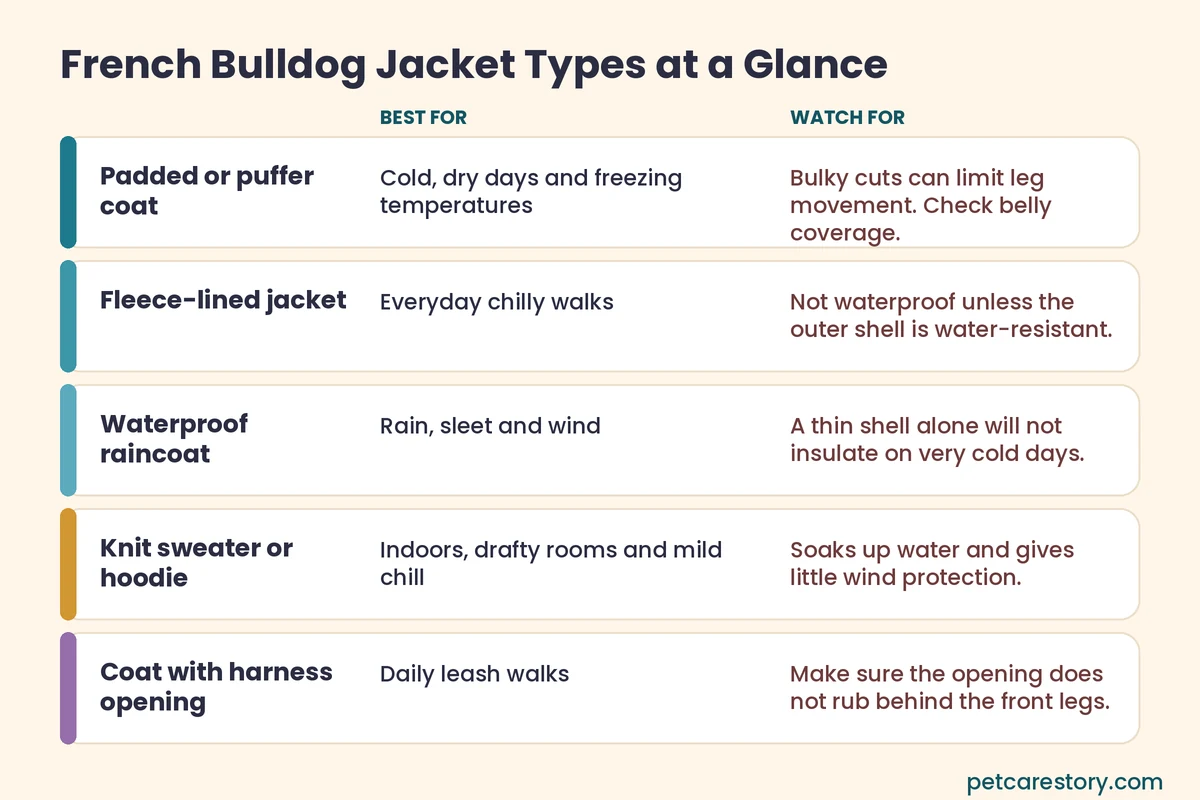
Comparison of Popular French Bulldog Winter Jacket Styles
Most French Bulldog jackets fall into a handful of styles. Each has a job it does well and a trade-off worth knowing about.
| Style | Best for | Watch out for |
|---|---|---|
| Padded or puffer coat | Cold, dry days and freezing temperatures | Bulky cuts can limit leg movement. Check belly coverage. |
| Fleece-lined jacket | Everyday chilly walks | Not waterproof unless the shell is water-resistant |
| Waterproof raincoat | Rain, sleet and wind | A thin shell alone will not insulate on very cold days |
| Knit sweater or hoodie | Indoors, drafty rooms and mild chill | Soaks up water and gives little wind protection |
| Coat with harness opening | Daily leash walks | The opening should not rub behind the front legs |
Padded or puffer coats are the go-to for freezing weather. The padding traps heat, and most have a wind-resistant shell. Look for a cut that does not stiffen the shoulders.
Fleece-lined jackets suit the typical chilly day. They are soft, easy to move in and usually machine-washable. If you live somewhere wet, pair one with a waterproof outer layer.
Waterproof raincoats are useful in a cold, wet climate. A dry dog stays warmer than a wet one. A raincoat with a fleece lining is a good two-in-one.
Sweaters and hoodies are comfortable at home or for mild days. They are not a good primary layer outside in the rain, because knit fabric soaks up water.
Harness-style coats combine a jacket and a harness, so there is one less thing to put on. Check that nothing rubs behind the front legs, where Frenchies often get irritated.
Materials Explained: What Actually Keeps a Frenchie Warm
Product pages are full of fabric names, and the label can be misleading. Here is what each common material does in practice, and what to expect from a French Bulldog winter jacket made from it.
- Nylon or polyester shell. Light, wind-resistant and quick to dry. Many shells are treated to be water-resistant, which handles drizzle and light snow. Heavy rain needs a fully waterproof coat with sealed seams.
- Fleece lining. Soft, warm for its weight and fast to dry. It traps a layer of warm air against the body, which is exactly what a thin-coated dog needs.
- Light padding or polyfill. Adds warmth without much weight. Check how bulky the padding is around the shoulders and legs, because thick padding can stiffen a short-legged dog’s stride.
- Wool or acrylic knit. Stretchy and cozy, and good for indoors or mild days. Knits soak up water and get heavy when wet, so they are a poor choice for rain or snow.
- Cotton. Comfortable at home, but slow to dry and not much help against wet cold.
- Faux shearling. Warm and plush around the neck and chest. It can mat over time, so check that it is washable.
One label distinction matters more than any other. “Water-resistant” means the fabric sheds light moisture. “Waterproof” means it should keep water out in sustained rain. If you live somewhere wet, look for waterproof, or pair a water-resistant jacket with a raincoat.
How to Measure Your French Bulldog for a Jacket
Measuring for a French Bulldog jacket takes two minutes and prevents most returns. You need a soft tape measure (a piece of string and a ruler works too) and a patient dog, ideally with a treat in hand.
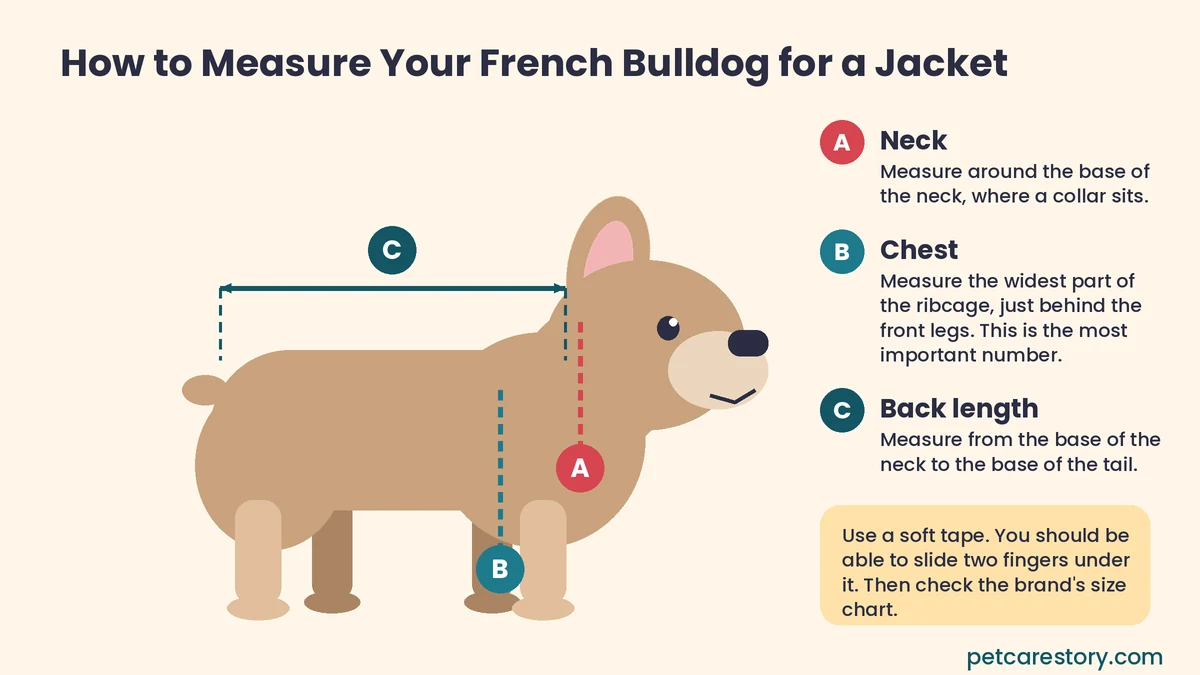
- Neck: measure around the base of the neck, where a collar usually sits.
- Chest: measure around the widest part of the ribcage, just behind the front legs. This is the most important number.
- Back length: measure from the base of the neck (where the collar sits) to the base of the tail.
The tape should be snug but not tight. You should be able to slide two fingers underneath. Write the numbers down, compare them with the brand’s size chart and, if your dog falls between two sizes, choose the bigger one if the chest is the deciding measurement. A little extra length is easier to live with than a coat that squeezes.
Remember that a puppy will outgrow a first jacket quickly. Frenchies also vary a lot in build, so two dogs of the same weight can need different sizes.
Choosing the Best French Bulldog Jacket for Your Situation
There is no single best winter coat for a French Bulldog, only the best one for your dog’s circumstances. Use the situations below to narrow your choice.
Snowy or freezing climates. Go for an insulated or padded coat with good chest and belly coverage. Add booties or a paw wipe routine if the pavements are salted, and keep outings short.
Rainy, mild winters. A lined waterproof raincoat is the most useful French Bulldog jacket in this climate. It keeps your dog dry, and a dry dog stays warmer.
Busy city life with short walks. A light fleece-lined jacket with reflective trim and a quick fastening is hard to beat. You will be putting it on and off several times a day, so ease of use matters.
Puppies. Puppies feel the cold more than adult dogs and grow quickly. Choose a soft, light jacket with adjustable fastenings, and do not buy far ahead of their size, because a coat that is too big can slip and tangle.
Senior Frenchies. Older dogs often feel the cold more, so warmth matters. Look for an easy-on design with a soft lining that does not require lifting the legs through narrow holes. If your dog seems stiff or sore in the cold, mention it to your vet.
Drafty homes. A knit sweater or a thin fleece can take the edge off a cold house. Keep an eye on your dog, though, and take it off if they start to pant.
Stylish Options for French Bulldogs
Once the fit and function are sorted, there is plenty of room for personality in a French Bulldog jacket. Frenchies carry clothes well, with their big ears, broad chests and expressive faces, and the style range is wide.
Trendy Patterns and Colors
These are the looks owners most often choose:
- Classic plaid and buffalo check. A winter staple that works with any coat color.
- Solid earth tones. Olive, rust, navy and charcoal look smart and hide mud well.
- Bright solids. Red, yellow and teal make a dark dog easier to see at dusk.
- Faux-shearling collars and linings. A soft, plush finish that looks cozy and adds warmth around the neck.
- Camo, stripes and prints. A fun option for dogs with a lot of character.
- Hoodie-style jackets. A casual look. Choose one with a hood that lies flat rather than bunching around the ears.
Think about your dog’s own coloring too. A brindle or black Frenchie often looks striking in a bright color, while fawn, cream and pied dogs suit deeper tones such as navy, green or burgundy.
Functional vs. Fashionable Designs
You do not have to pick one or the other, but be honest about what your dog needs first. A jacket that looks fantastic and leaves your dog cold, soggy or restricted has failed. A simple approach is to choose the function first and the style second:
- For daily winter walks, put function first: a warm, water-resistant, well-fitted coat.
- For short outings, photos and holiday events, you can lean toward fashion with a knit or a festive design.
- For the best of both, look for reflective trim, a harness opening and a lining in a color you like.
Many owners end up with two jackets: one reliable everyday coat and one fun style for special occasions.
Practical Benefits of Frenchie Winter Coats
Winter coats for French Bulldogs do more than keep your dog looking sharp.
Keeping Your Pup Warm and Cozy
The most obvious benefit is comfort. A coat holds in the body heat your dog makes, shields the chest and belly from cold air, and makes winter walks more enjoyable. Dogs that are warm tend to be happier to go out, and they get the exercise and toilet breaks they need.
Look for these signs that your Frenchie is cold: shivering, lifting paws off the ground, slowing down or refusing to walk, tucking the tail, seeking warm spots or whining to go home. If you see them, head indoors and warm your dog up gently.
Protecting Against Elements and Health Risks
A good French Bulldog jacket also protects against the less obvious winter problems:
- Wet and wind chill. A water-resistant shell keeps rain, sleet and snow off the coat and skin.
- Cold stress. Prolonged cold can lower body temperature. Severe shivering, weakness or drowsiness after time outdoors means you should warm your dog and call your veterinarian.
- Joint and muscle stiffness. Cold can make older dogs stiffer. Keeping the body warm helps them feel more comfortable on walks.
- Breathing comfort. Cold stress can aggravate breathing problems in flat-faced breeds, so keeping your dog warm and walks short helps.
A coat does not replace common sense. Keep walks shorter in very cold weather, never leave your dog outdoors unattended, wipe paws after walks, and keep fresh, unfrozen water available. If you are unsure whether your dog is coping with the cold, ask your vet.
One safety point runs the other way too: Frenchies overheat easily. Take the jacket off once you are indoors or in a warm car, and watch for heavy panting, drooling or red gums. If you see them, remove the coat, cool your dog down and contact your vet.
How to Get Your French Bulldog Used to a New Jacket
Many dogs freeze, flop over or try to back out of a French Bulldog jacket the first time. That is normal, and a calm introduction fixes it.
- Let your dog sniff the jacket. Reward them with a treat for looking at it.
- Put it on for a few seconds, then take it off and reward. Do not force it.
- Build up the time indoors over several short sessions, with treats, play or a meal.
- Go for a short walk. A walk is a great distraction once they are used to wearing it.
Keep it positive. If your dog seems stressed, go back a step. This is the same patient, reward-based approach that works for most new routines, and it is one of the habits covered in our guide to common dog care mistakes new owners make. On days that are too cold or icy for a proper walk, indoor games such as wooden puzzle toys keep your Frenchie’s mind busy.
How to Care for and Clean a French Bulldog Jacket
A French Bulldog jacket that spends the winter on muddy walks will get dirty. A little care keeps it comfortable, safe and effective.
- Follow the care label. Most dog jackets can be machine-washed on a gentle cycle, but some padded or faux-fur styles need hand washing.
- Close the Velcro and zips before washing. Open hook-and-loop fasteners snag on the lining and on other items in the drum.
- Skip fabric softener on water-resistant coats. It can reduce the fabric’s ability to repel water.
- Dry thoroughly. Air-dry or use a low heat setting, and make sure the lining is fully dry before your dog wears it again. A damp jacket makes a cold dog colder.
- Inspect it regularly. Look for loose stitching, worn Velcro, broken fasteners and frayed edges. Anything that can come loose can be chewed or swallowed.
- Check your dog’s skin. After a long wear, look at the neck, armpits and chest for redness or rubbing, especially around the skin folds some Frenchies have. Redness means the fit or fabric needs changing.
Having two jackets to rotate is a practical way to make sure one is always clean and dry.
Common Mistakes When Buying a French Bulldog Jacket
Most disappointing purchases come down to the same handful of mistakes. Avoid these and you are well on your way to a good fit.
- Buying by weight or age. Chest girth is the number that matters. Two Frenchies of the same weight can have very different builds.
- Choosing looks over movement. A jacket should not change the way your dog walks. If the stride looks shorter or stiffer, the armholes are too tight.
- Ignoring the neckline. A tight, stiff or high collar is a poor fit for a flat-faced dog. Choose soft and roomy.
- Expecting one coat to do everything. A thin fleece will not cope with freezing rain, and a heavy puffer is too much for a mild day. Match the coat to the weather.
- Leaving it on too long. Take it off indoors, in the car and whenever your dog is warm.
- Forgetting about growth. A puppy can outgrow a coat in weeks. Check the fit often and choose adjustable fastenings where you can.
- Skipping the trial run. Try the jacket at home before the first walk, so you can adjust the fit and your dog can get used to it.
Where to Buy the Best Dog Jackets for French Bulldogs
You can find French Bulldog jackets in pet stores, big retailers and independent shops. The sections below cover the online options and how to pick the right size.
Top Online Retailers for French Bulldog Jackets
These online shops all carry coats and jackets aimed at French Bulldogs. Ranges, prices and stock change often, so check each product page for the latest sizing, materials and shipping details.
| Retailer | What you will find |
|---|---|
| Frenchie Complex | A dedicated collection of French Bulldog jackets and coats |
| Frenchie Shop | French Bulldog coats and winter jackets |
| Voyagers K9 Apparel | A warm winter coat designed for French Bulldogs |
| Pepper Petwear | A ready-made winter French Bulldog coat |
| The Dog Outdoors | Winter dog coats for French Bulldogs |
| Cloak & Dawggie | Waterproof coats, raincoats, sweatshirts, harnesses and accessories |
| TrueFit Dog Coats | A French Bulldog coat range |
| CLOUD7 | French Bulldog coats, raincoats and jumpers (check shipping to the US) |
| Walmart | French Bulldog coats for puppies and adult dogs from multiple brands |
| Etsy | Warm coats and jackets from independent makers |
Local pet stores are worth a visit too. Trying a jacket on your dog in person is the easiest way to check the fit across the chest and shoulders. If you can, buy from a shop with an easy return or exchange policy.
Tips for Choosing the Right Size and Fit
- Use the brand’s own size chart. A medium from one brand can be a large from another.
- Go by chest girth first, then check the back length.
- Read the reviews from other Frenchie owners. They often say whether a coat runs small or narrow in the chest.
- Check the return policy before you buy, especially for a puppy who is still growing.
- Do the movement test. At home, watch your dog walk, sit and lie down in the jacket. It should not ride up, twist or restrict any movement.
- Look at the details. Seams, fasteners and the underside of the neckline should be smooth and not scratch your dog’s skin.
French Bulldog Jacket FAQs
Do French Bulldogs need jackets?
Most do in cold, wet or windy weather. French Bulldogs have a short, thin coat and a small body, so they lose heat quickly. A fitted jacket helps them stay comfortable on winter walks, particularly below about 40 to 50°F (4 to 10°C).
What size jacket does a French Bulldog need?
It depends on your dog’s chest, neck and back length, not on age or weight alone. Measure around the widest part of the ribcage behind the front legs, then compare with the brand’s size chart. If your dog falls between sizes, go up if the chest is the deciding measurement.
What temperature is too cold for a French Bulldog?
Most healthy adult Frenchies start to benefit from a jacket between 40 and 50°F (4 to 10°C), and need an insulated coat and shorter walks below freezing. Wind, rain, age and health change this, so watch your dog for signs of cold.
What is the best winter coat for a French Bulldog?
The best winter coat is the one that fits well and matches your weather. For freezing, dry days, choose an insulated or padded coat. For wet climates, choose a water-resistant coat with a fleece lining. In every case, look for a roomy neckline, wide armholes and good chest and belly coverage.
Can a French Bulldog wear a jacket indoors?
Usually not for long. A light sweater can help in a drafty house, but Frenchies overheat easily. Take the coat off once you are inside, and watch for heavy panting or drooling.
Is a sweater or a jacket better for a French Bulldog?
For outdoor winter walks, a jacket is better because it blocks wind and wet. A sweater is fine indoors or in mild weather, but knit fabric soaks up water and offers little protection from wind.
Are dog jackets safe for flat-faced breeds?
Yes, if they fit properly. Choose a soft, roomy neckline and wide armholes, and avoid anything that presses on the throat or chest. If your dog struggles to breathe, remove the jacket and speak to your vet.
Final Thoughts on Choosing a French Bulldog Jacket
The right French Bulldog jacket keeps your dog warm, dry and moving freely, and the right style makes winter walks more fun for both of you. Start with the measurements, choose the style that matches your weather, and check the neckline, armholes and belly coverage before you buy. Introduce it slowly, take it off indoors, and keep an eye on how your dog responds.
For more practical advice, browse our dog care guides and our pet accessories guides.
This article is general information and is not a substitute for veterinary advice. If you are worried about your dog’s health, breathing or response to cold weather, talk to your veterinarian.